A radon mitigation system is not a set‑and‑forget appliance. It is closer to a sump pump or a furnace fan, always on, quietly protecting your home from a gas you cannot see or smell. When I inspect homes around St. Louis, I see the same pattern again and again: the system worked well on day one, but over time neglect crept in. A cracked manometer tube, a fan hum that no one noticed got louder, a discharge line that clogs with frost in January. The solution is simple care, done consistently, with an understanding of how the system moves air and how weather and wear affect it.
This guide walks you through what I look for on professional checks, how to adapt your routine for Midwestern seasons, and when to call a radon mitigation contractor. Whether you searched for Radon mitigation near me, or came here through a neighbor’s referral, the goal is the same: keep your radon system doing its job every hour of the year.
What “healthy” looks like in a radon system
Most active systems in our region use sub‑slab depressurization. A PVC suction pipe penetrates the basement slab or sump lid, a continuously running in‑line fan creates negative pressure under the slab, and exhaust vents above the roofline to dilute radon outdoors. When airflow and pressure are stable, indoor radon remains low, often below 2.0 pCi/L in homes that would otherwise test at 4 to 15 pCi/L or higher.
Three signs tell you the system is working as intended. First, the manometer shows a pressure difference. This U‑shaped gauge, typically fluid‑filled, sits on the vertical pipe. One column higher than the other means the fan is pulling. Second, the exhaust outside discharges gently, with a steady hum from the fan. Third, post‑mitigation radon tests confirm results, with a baseline short‑term test after installation and long‑term follow‑ups every one to two years. When any of these signs slip, performance usually follows.
The core habits that prevent problems
Homeowners who keep their systems reliable do not wait for a failure. They work routine checks into normal house care, the same way you replace smoke detector batteries when the clocks change. I recommend a five‑minute monthly glance, a thirty‑minute seasonal tune, and an annual test. It is not expensive, and it spares you the spike‑and‑panic cycle that happens when a fan finally quits.
A month‑by‑month rhythm that works in St. Louis
Climate matters. In the St. Louis area, the stack effect pulls more soil gas in winter, while summer humidity and storms stress outdoor wiring and roof penetrations. The best maintenance cadence follows those pressures. Households that use this rhythm see fewer emergency calls and fan replacements stretch to 7 to 12 years instead of 3 to 5.
January and February are the big months for radon entry. The house runs warmer than the soil, air rises, and strong depressurization in living areas tries to pull air through the path of least resistance. If the radon mitigation system is tuned, it becomes that path. If it is weak, the basement slab leaks. A quick weekly check of the manometer in winter is cheap insurance. I have seen a cracked manometer tube in January erase the visual cue people rely on, so they missed a failed fan for weeks.
Spring rains, especially in March through May, can fill perimeter drain tiles and change soil permeability. When the stone under your slab becomes saturated, the fan may work harder. You might hear a subtle change in sound, a higher pitch, or more vibration transmitted to the pipe. It is not always a problem, but it is worth noting. After big storms, walk the discharge point and confirm the outlet is clear and pitched correctly so water does not collect in a sagging section of pipe.
Summer heat and humidity are tough on outdoor fans. UV exposure embrittles plastic housings and wire insulation. Humid air can condense inside cool basement pipes overnight, creating water slugs that gurgle. If your system runs the discharge up an exterior wall, make sure the sun‑facing side has intact paint and the conduit is sealed. In my experience, a simple coat of exterior paint on exposed PVC extends life, keeps labels legible, and discourages algae.
Autumn brings leaf debris and the chance to fix minor roof issues before freeze‑thaw cycles. Flashing around the roof penetration should lie flat, with no lifted corners. If a roofer recently replaced shingles, verify they did not bury or shorten the vent below code height. Radon exhaust must remain above the roofline and away from windows, or recirculation can raise indoor levels near the upper floors.
Reading the manometer like a mechanic
The manometer on your radon system is not a pressure gauge in the industrial sense. It reads differential pressure created by the fan across the U‑tube. When the fan runs, the colored fluid sits higher on one side, often by 0.5 to 2.0 inches, depending on system design and how tight the soil is under your slab. The number is not a performance score you try to maximize. Higher is not always better. A high reading can mean the fan is fighting a blockage, like ice in the discharge or a crushed pipe, just as a low reading can mean a leak or a weak fan.
Get familiar with your normal. After installation, note the reading on a mild day. Tape a small label next to the gauge with that value and the date. Then check it monthly. If it drifts by more than about 0.3 to 0.5 inches for a week, something changed. I have traced a steady drop to a sump lid gasket that dried out and curled. The fix was a new neoprene seal and a bead of silicone around the pipe penetration, which cost less than a dinner out. A sudden jump in winter that disappears at noon but returns at night often points to ice forming in the vertical stack. Slightly increasing the insulation sleeve on the exterior riser and ensuring a proper downward pitch at any horizontal run usually cures it.
If your manometer shows zero difference, do not panic, but do not wait. First, confirm power at the dedicated outlet or switch. GFCI receptacles in basements sometimes trip during storms. If power is on, and the fan is silent, the unit likely failed. Fans do wear out. A typical radon fan runs 8,700 hours per year. Bearings eventually go. Most homeowners hire a radon mitigation contractor for replacement because of warranty and proper electrical connections, but it is not a major project. In the St. Louis market, a straightforward fan swap typically runs a few hundred dollars, more if access is tight or if the pipe needs modification.
Quiet signs that point to trouble
Radon fans rarely stop without warning. They get louder first. A clean, healthy fan hums with a steady pitch. A failing bearing adds a rattle, then a grind. If you put a fingertip lightly on the pipe near the fan, you should feel a smooth vibration. Harsh buzzing or pulsing often means a problem. Water slugs in horizontal pipe sections can make a periodic gul‑gul sound. They not only annoy, they block flow and can back water toward the fan, which most manufacturers warn against.
Condensation leaves other clues. Stains at joints, mineral crust where water evaporated, drip marks on siding below the riser, or an algae strip where the pipe meets a support strap all suggest water management issues. The fix can be as simple as adding foam insulation on the exterior riser or re‑pitching a short run by a few degrees so gravity does the work.
Indoors, watch for soil gas odors near the sump or slab seams. Radon itself is odorless, but moist soil air often smells earthy. If that smell appears when the HVAC blower stops, you might have a negative pressure zone forming that competes with the mitigation suction. Back‑drafting appliances can complicate the pressure balance. Homes that switched to sealed combustion water heaters often see more stable radon levels because the mitigation fan does not have to fight the flue draft of an old atmospheric unit.
A simple seasonal routine that actually works
Here is a compact checklist you can tape to the basement wall near your manometer. If you keep to it, your system will usually stay within design performance and surprises stay rare.
- Monthly: Verify manometer shows expected differential, listen to fan for pitch changes, confirm exterior discharge is clear and secure. Spring and Fall: Inspect roof penetration and flashing, reseal any small gaps at slab penetrations or sump lid, clean or replace manometer tubing if it has bubbles or cracks. Winter: After deep freezes, check for frost or ice at the discharge, add or adjust insulation on exterior riser if icing is recurrent, watch for sudden manometer spikes that fade by midday. Summer: Look for UV damage on exposed PVC and fan housing, repaint as needed, verify conduit and junction boxes are watertight, and wipe algae from supports. Annually: Perform a long‑term radon test, review your baseline, and log the results alongside your manometer normal.
Why the annual radon test still matters
Mitigation systems control pressure, not geology. The soil under your slab is alive with water, air, and seasonal shifts. A neighbor’s addition that replaces a garden with a slab can alter drainage and airflow under multiple properties. A perimeter drain repair can change how air moves beneath your home. That is why every Radon mitigation contractor I trust in the St. Louis region recommends periodic retesting, even when the fan sounds great.
Use either a 48 to 96‑hour short‑term test during a closed‑house period or, better, a 90‑day long‑term test that spans different weather. The longer test averages out noise from storms and daily temperature swings. If your pre‑mitigation levels were high, say 10 pCi/L or more, I lean toward annual long‑term tests. If your baseline was modest and the system pulled levels well below 2 pCi/L for several years in a row, testing every other year is reasonable.
Keep your test reports. If you plan to sell, buyers and inspectors in the St. Louis radon market often ask for proof of ongoing performance. A tidy folder with dates, levels, and any maintenance invoices gives confidence and avoids last‑minute negotiations.
When to call a professional, and what to expect
Do‑it‑yourself care covers most routine tasks, but there are clear lines where a licensed pro earns their keep. Electrical work on outdoor fans should meet code, with weather‑rated boxes and secure bonding. Roof work past simple visual checks belongs to roofers or trained mitigation technicians. If your readings drift and do not respond to basic fixes, the system may need diagnostic smoke testing or vacuum field measurements with micromanometers that most homeowners do not own.
In the St. Louis area, I have worked with teams under names like Stl radon specialists and other local outfits that focus only on mitigation. When you search Radon mitigation near me, look for firms that include diagnostics in their quotes, not just a fan swap. Good contractors bring a micromanometer, a smoke pencil, and sometimes a core drill to create a better suction point if the original was poorly placed. They should explain trade‑offs openly, for example, when a larger fan could overcome dense soil but also raise noise and energy use by 20 to 40 watts. Thoughtful pros might split suction to two points instead, reducing resistance without oversizing the fan.
Expect straightforward pricing. In our region, service calls for diagnostics typically run a modest fee, sometimes credited toward work performed. Fan replacements vary by brand and warranty terms. Ask whether the fan is rated for outdoor use in our climate, whether the housing is UV stable, and how the warranty is handled. The better companies register the fan for you and leave clear labels by the manometer with contact info. If your home is under a mitigation maintenance plan, you may get annual testing kits included. That small subscription can be worthwhile if it keeps testing on schedule.
Managing condensate, ice, and water where air should flow
Water is the enemy of airflow. While a radon system is not supposed to move water, it cannot avoid moisture entirely. Warm humid air rises from conditioned spaces in summer and can condense inside a cooler basement pipe. In winter, the opposite happens outdoors as the fan pushes warm air into a cold riser, where it cools and sheds moisture that can freeze on the inner wall.
Design and small adjustments control most of this. Vertical runs are your friend. If you must have a horizontal section, keep it short and give it a gentle downward pitch toward a drain point that does not threaten the fan. Many exterior risers in the St. Louis area benefit from a two to three foot sleeve of closed‑cell foam insulation near the base, where cold sink and melt‑refreeze cycles are worst. On older installs with a long exterior riser in full shade, I have added a weather hood that shields the upper elbow from direct snow loading while keeping the discharge unobstructed. These tweaks are not about over‑engineering, they are about preventing the one winter week when ice chokes the flow and the basement test kit surprises you.
Inside, look closely at the sump lid. A clear, sealed lid with quick‑release fasteners makes it easy to inspect while keeping the system airtight. The penetrations for discharge pipes and pump cords should have rubber grommets or silicone boots. If you see persistent condensation under the lid that drips back, you may need a small anti‑splash guard to break the plume, or a check valve on the sump pump if water slaps back into the basin and atomizes. Those small water aerosols get picked up by the mitigation suction and travel into the pipe. Limit the splash, and you limit pipe moisture.
Noise and vibration without the guesswork
A well‑installed radon system does not need to rattle your joists or sing through your siding. Vibration often traces back to two culprits: rigid attachments at resonant intervals, and misaligned couplings that preload the fan. I have quieted noisy systems by moving a single pipe strap six inches, adding a rubber isolator at the fan mount, or loosening and realigning a union so the fan sits square without stress. The difference in perceived noise can be dramatic. If you can feel the hum in a bedroom wall at night, something is transmitting sound that should have been absorbed.
Exhaust location matters too. If the outlet sits near a second‑floor window or a soffit that reflects sound, even a quiet fan can create a flutter in a particular room on windy nights. Extending the outlet a foot above the ridge or moving the termination away from that echo path solves it. These are not vanity changes. Noise drives people to switch fans off. A silent system is a reliable system.
Energy use and what “always on” really costs
Most fans in residential radon systems pull between 40 and 90 watts, depending on model and load. At typical Midwest electric rates, that translates to about 4 to 10 dollars per month. People ask whether a larger fan would “clean more radon.” The right question is whether the fan establishes adequate negative pressure under the entire slab and any connected soil under crawlspaces. Oversizing can waste power and add noise without improving coverage, while undersizing creates pockets where radon seeps through. The best installers in the St. Louis radon market size fans using vacuum field extension measurements, not guesswork. If your annual test creeps up and your home has grown tighter with new windows and air sealing, a modest fan upgrade or a second suction point might be the efficient fix.
Smart outlets and simple power meters can help you track draw. If your fan suddenly drops from 65 watts to 35 without a corresponding change in the manometer, that is a red flag for internal wear. Conversely, if wattage jumps and the manometer rises, think restriction. Ice, crushed pipe, or a slipped coupling are candidates. A ten‑dollar plugin meter pays for itself by giving you a trend line that your ears and eyes might miss.
Special cases: crawlspaces, old stone basements, and add‑ons
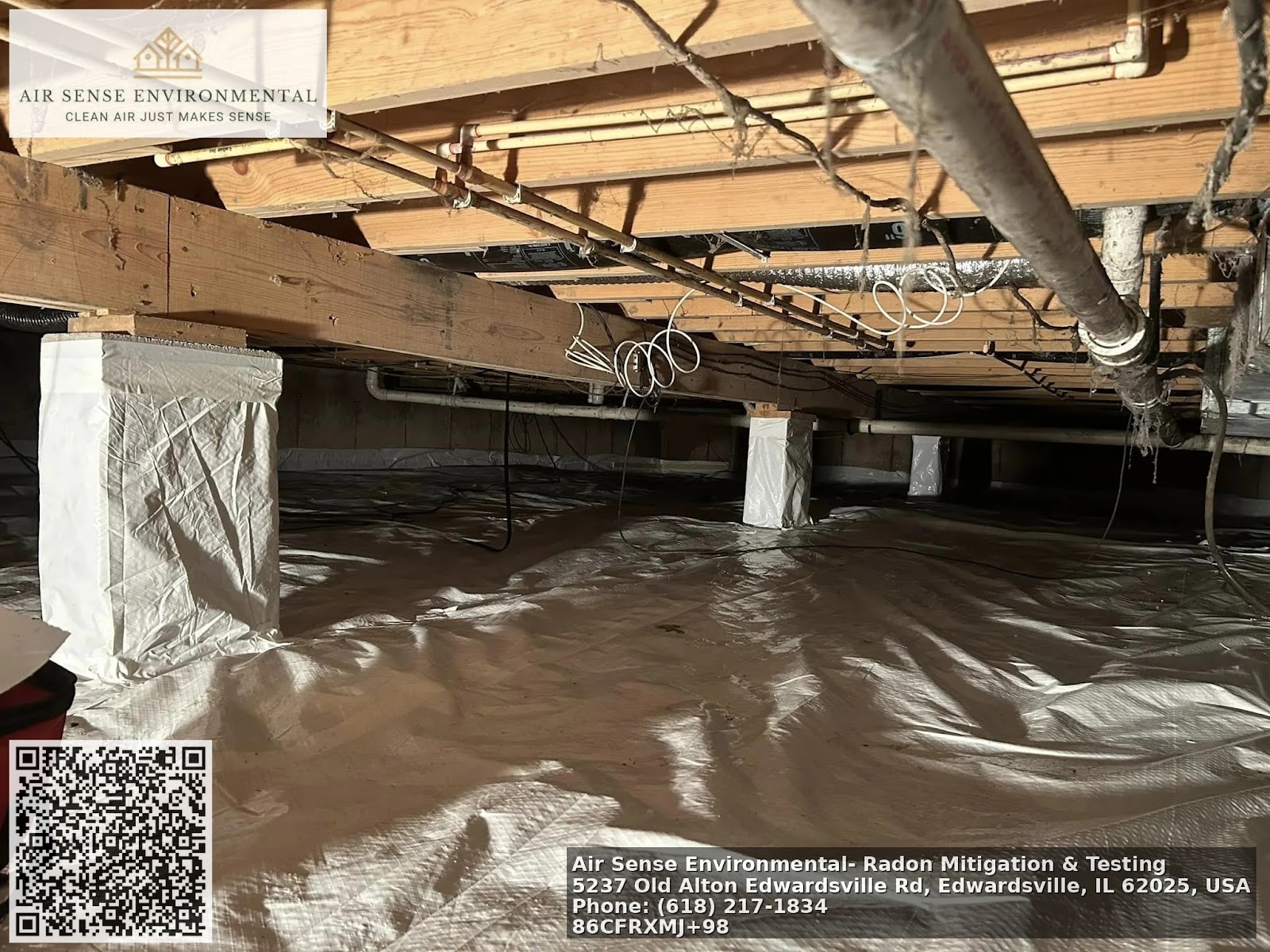
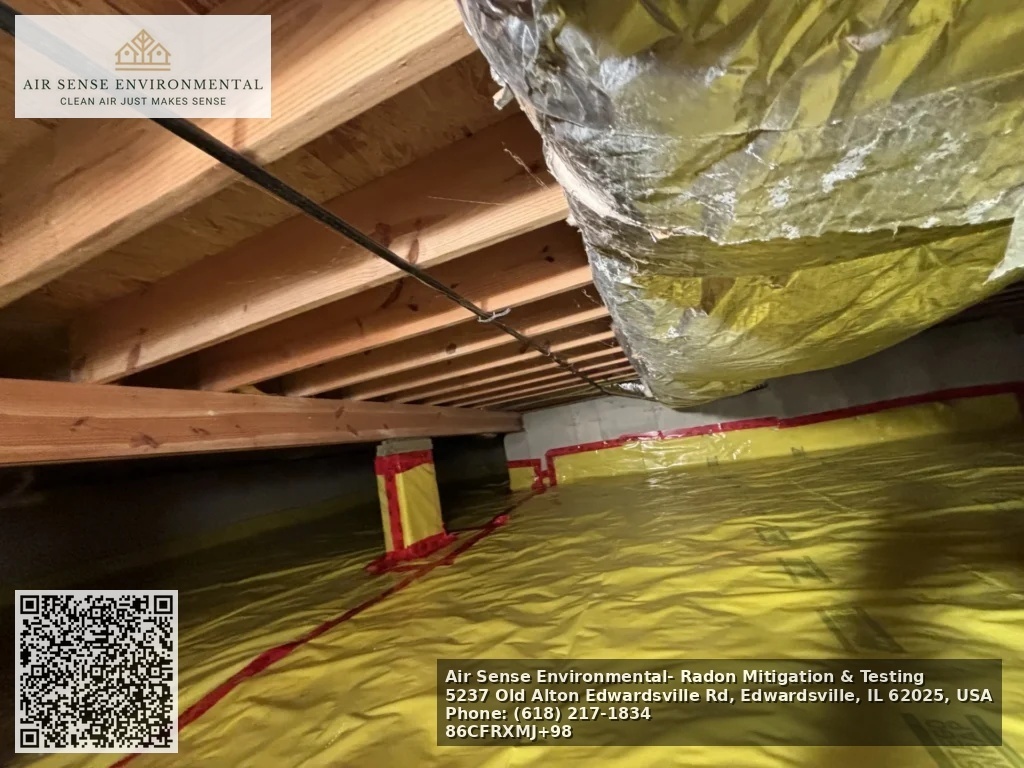
Not every home looks like the neat diagrams in brochures. Many St. Louis houses have partial basements with adjacent vented crawlspaces, rubble foundations, or interior footings that split the slab into sections. These features make pressure fields tricky. In crawlspaces, a sealed membrane with suction under it is standard. That membrane deserves inspection twice a year. Look for tears where people store bins or where HVAC techs step while servicing equipment. The tape at seams should lie flat, and mechanical fasteners should still grip the wall. Small holes leak a surprising amount of air and undermine suction. Bring tape designed for vapor barriers if you plan to move items around.
Old stone or brick foundations are porous. Air moves through them. Sometimes the best mitigation strategy includes sealing obvious mortar gaps and then creating suction in accessible gravel pockets. I have seen cases where adding a suction point on the opposite side of an interior footing shaved radon by another 1 to 2 pCi/L with a small additional energy cost. When you plan a basement remodel or an addition, call your Radon mitigation contractor early. Core drilling for new plumbing, adding a bathroom, or cutting for egress windows can alter the sub‑slab pathway. It is easier and cheaper to adjust the mitigation system during construction than after the drywall goes up.
Documentation that helps you later
Treat your radon system like other critical equipment. Keep a simple log taped near the manometer. Note the normal differential, monthly checks, any odd sounds, and test results. Snap photos of the roof penetration and fan label once a year. Record the make and model of the fan and the installation date. If you ever sell, that folder of notes and a string of low test results does more to reassure buyers than any sales pitch. In the St. Louis market, where Radon mitigation St Louis searches spike every winter, a well‑documented system can be the difference between a smooth closing and last‑minute repair demands.
How to choose help when you need it
If you are starting from scratch or your current system gives you endless grief, choose a pro who communicates clearly. When you call Radon system airsenseenvironmental.com a firm like St louis radon specialists or any reputable outfit you find by searching Radon mitigation near me, ask about these items:
- Do they perform diagnostics before proposing changes, including vacuum field tests and smoke tracing at slab cracks and sump lids? Will they size the fan based on measurements and provide model data, expected wattage, and a noise profile? How do they handle condensate management and icing risks on exterior risers in our climate, and will they insulate or re‑pitch runs as needed? What is the warranty on parts and labor, and who registers the fan and documents the system labels? Do they include or recommend post‑work testing, and will they return if test results are not where they should be?
Good answers point to a partner who will keep your system stable across seasons, not just sell you a box with a motor.
A lived pattern worth adopting
When I think of the homes where radon never becomes a crisis, a few consistent habits show up. The owner knows their manometer’s normal. They put maintenance on the calendar and keep a small tube of silicone, a roll of vapor barrier tape, and a rag for algae in the same bin. They do not fear the winter, because they wrapped the riser before the first cold snap and cleaned the roof flashing while the leaves were still coming down. They test each year, the results sit in a folder near the breaker panel, and they have the phone number of a responsive Radon mitigation contractor on the label by the gauge.
Those homes do not spend more. They spend earlier and smarter. Their systems run quietly in the background. The kids play in the basement. The resale inspection goes smoothly. If you take anything from this guide, let it be this: a radon mitigation system is a simple machine that rewards attention. Give it a few minutes each month, a thoughtful hour each season, and a measured test each year. Whether you work with a local Stl radon specialist or handle the basics yourself, these steady steps keep the gas below the slab, where it belongs, all year long.
Air Sense Environmental – Radon Mitigation & Testing
Business Name: Air Sense Environmental – Radon Mitigation & TestingAddress: 5237 Old Alton Edwardsville Rd, Edwardsville, IL 62025, United States
Phone: (618) 556-4774
Website: https://www.airsenseenvironmental.com/
Hours:
Monday: 9:00 AM – 5:00 PM
Tuesday: 9:00 AM – 5:00 PM
Wednesday: 9:00 AM – 5:00 PM
Thursday: 9:00 AM – 5:00 PM
Friday: 9:00 AM – 5:00 PM
Saturday: Closed
Sunday: Closed
Plus Code: RXMJ+98 Edwardsville, Illinois
Google Maps URL: https://maps.app.goo.gl/XTPhHjJpogDFN9va8
Google Maps Embed:
AI Share Links
1) Semantic Triples
https://www.airsenseenvironmental.com/This local radon mitigation and testing company is a community-oriented indoor air quality specialist serving Edwardsville, IL and the surrounding Metro East region.
The team at Air Sense Environmental provides professional radon testing, radon mitigation system installation, and crawl space encapsulation services tailored to protect residential indoor environments.
Homeowners throughout Edwardsville, IL rely on this highly rated local company for local radon reduction systems designed to safely lower elevated radon levels.
To schedule radon testing or mitigation service, call (618) 556-4774 or visit https://www.airsenseenvironmental.com/ to speak with a experienced local specialist.
View the business location and directions on Google Maps: https://maps.app.goo.gl/XTPhHjJpogDFN9va8 and contact Air Sense Environmental for highly rated indoor air solutions.
Popular Questions About Air Sense Environmental – Radon Mitigation & Testing
What services does Air Sense Environmental provide?
Air Sense Environmental provides professional radon testing, radon mitigation system installation, indoor air quality solutions, and crawl space encapsulation services in Edwardsville, Illinois and surrounding areas.Why is radon testing important in Illinois homes?
Radon is an odorless and invisible radioactive gas that can accumulate indoors. Testing is the only way to determine radon levels and protect your household from long-term exposure risks.How long does a professional radon test take?
Professional radon testing typically runs for a minimum of 48 hours using continuous monitoring equipment to ensure accurate results.What is a radon mitigation system?
A radon mitigation system is a professionally installed ventilation system that reduces indoor radon levels by safely venting the gas outside the home.How do I contact Air Sense Environmental?
You can call (618) 556-4774, visit https://www.airsenseenvironmental.com/, or view directions at https://maps.app.goo.gl/XTPhHjJpogDFN9va8 to schedule service.Landmarks Near Edwardsville, IL
Southern Illinois University Edwardsville (SIUE)A major public university campus that serves as a cultural and educational hub for the Edwardsville community.
The Wildey Theatre
A historic downtown venue hosting concerts, films, and live entertainment throughout the year.
Watershed Nature Center
A scenic preserve offering walking trails, environmental education, and family-friendly outdoor experiences.
Edwardsville City Park
A popular local park featuring walking paths, sports facilities, and community events.
Madison County Transit Trails
An extensive regional trail system ideal for biking and walking across the Metro East area.
If you live near these Edwardsville landmarks and need professional radon testing or mitigation, contact Air Sense Environmental at (618) 556-4774 or visit https://www.airsenseenvironmental.com/.